2026 Best Corrugated Packaging Solutions for Global Buyers?
The global demand for corrugated packaging is witnessing significant growth. According to a recent report by Smithers, the market is expected to reach $300 billion by 2026. This increase is driven by the rise in e-commerce and the push for sustainable packaging solutions. Corrugated packaging offers excellent protection, flexibility, and recyclability, making it a preferred choice across various industries.
In 2023, it was noted that over 70% of all e-commerce products utilize corrugated packaging. This highlights the industry's adaptation to consumer needs. However, challenges remain. The supply chain disruptions and the rising costs of raw materials pose risks to manufacturers. Buyers must be strategic when selecting corrugated packaging solutions to ensure efficiency and sustainability.
As we approach 2026, understanding the landscape of corrugated packaging is crucial. Buyers should evaluate their options and stay informed about market trends. Collaborating with reliable suppliers can enhance their operational capabilities. Only through careful consideration can businesses thrive in this evolving market.

2026 Global Trends in Corrugated Packaging: Market Analysis and Insights
Corrugated packaging is evolving. In 2026, global trends show a shift toward sustainability and customization. Many buyers are seeking eco-friendly materials. Consumers are increasingly aware of environmental impacts. This change drives demand for recyclable and biodegradable options.
The market analysis highlights the growing need for lightweight packaging solutions. Lighter packaging reduces shipping costs and carbon footprints. However, not all lightweight designs compromise strength. Innovations in materials have made it possible to achieve both goals. Companies must keep pace with these advancements to stay competitive.
As the industry grows, challenges remain. The reliance on digital technologies can lead to vulnerabilities. Cybersecurity is a critical concern as businesses adopt smarter packaging systems. Additionally, balancing cost with quality is an ongoing struggle. Buyers must navigate these complexities carefully. Addressing these issues will be key to future success in the corrugated packaging market.
2026 Global Trends in Corrugated Packaging
This chart illustrates the projected market growth of corrugated packaging demand across various regions in 2026. The data represents the growth rate in percentage based on market analysis and insights.
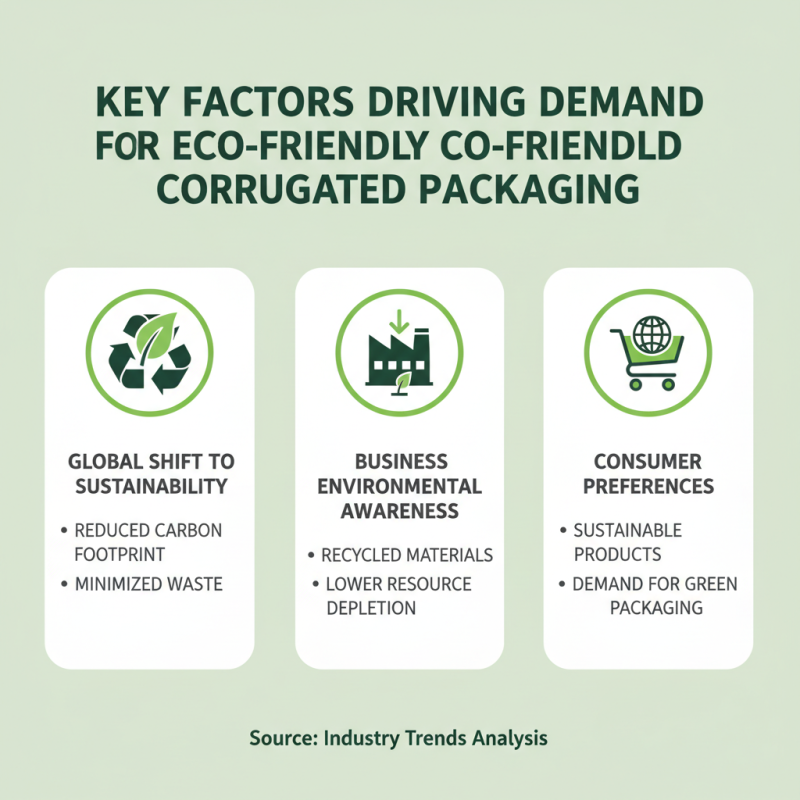
Key Factors Driving Demand for Eco-Friendly Corrugated Packaging Solutions
The global shift towards sustainability is significantly shaping the demand for eco-friendly corrugated packaging solutions. Businesses are increasingly aware of their environmental impact. They seek packaging that reduces carbon footprints and minimizes waste. This trend is driven by consumer preferences for sustainable products. Eco-friendly packaging often uses recycled materials, which lowers resource depletion.
Innovation is another important driver. Companies are investing in research to create better, greener materials. This includes bio-based coatings that enhance durability without harming the environment. However, challenges remain. Not all eco-friendly options provide the same level of protection. Companies must balance sustainability with functionality. For example, some materials may be less effective in moisture resistance.
Regulatory pressures also play a role. Governments worldwide are encouraging, even mandating, greener practices. This leads to increased competition within the packaging industry. Businesses that embrace these changes may find new market opportunities. Yet, they must navigate complex compliance requirements. Companies need to remain agile to adapt to evolving standards. The landscape of corrugated packaging solutions is changing rapidly, reflecting broader consumer and regulatory trends.
Technological Innovations Revolutionizing the Corrugated Packaging Industry
The corrugated packaging industry is undergoing significant transformation driven by technological innovations. Advancements in materials science have led to stronger and lighter packaging options. This shift not only enhances durability but also reduces shipping costs. Manufacturers are now leveraging eco-friendly materials to meet consumer demand for sustainable solutions.
Automation has become another game changer. Smart machines streamline production processes, increasing efficiency and consistency. These machines can adjust to various sizes and designs on the fly. However, companies face challenges in integrating these technologies into existing systems. Not every facility can afford these upgrades, leading to a widening gap in capabilities.
Digital printing is revolutionizing branding opportunities. It allows for high-quality graphics and short runs without large fees. This innovation caters to businesses wanting customizable solutions. Yet, the impact of digital solutions on traditional printing methods raises questions. Will traditional methods fade or find a new niche? As brands continue to evolve, the corrugated packaging landscape will likely reflect these ongoing uncertainties.
Comparative Cost Analysis: Corrugated Packaging vs. Alternative Materials
The global packaging industry faces a pivotal moment, especially when considering the cost-effectiveness of corrugated packaging versus alternative materials. According to a report by Smithers Pira, the corrugated market is projected to reach $300 billion by 2026. This growth underscores the material's importance in supply chains. In particular, it is favored for its lightweight properties, which can reduce shipping costs. Research indicates that corrugated packaging reduces carbon emissions by four times compared to plastic and other alternatives, further enhancing its environmental appeal.
However, cost is not the only determining factor. A comparative analysis reveals that corrugated packaging can be up to 25% cheaper than materials like plastic and metal for certain applications, particularly in bulk shipments. Yet, some sectors may find alternatives more effective for specific needs, such as durability or moisture resistance. A survey from the Packaging Association highlights that 70% of companies prefer corrugated based on sustainability metrics, but 20% are still exploring alternatives for performance reasons.
Balancing costs with performance can be challenging, demanding careful consideration and sometimes leading to regret over premature decisions. Ultimately, the choice of packaging material must align with the product's requirements, not just the price tag.
Sustainability Metrics: Measuring the Impact of Corrugated Packaging Solutions
Sustainability is a crucial consideration for corrugated packaging solutions in 2026. Global buyers are now more aware of environmental impacts. They seek solutions that minimize waste and promote recycling. Metrics for sustainability are not always clear. Companies need to embrace transparency in their processes.
Accurate metrics include recycled content and energy consumption. Companies must track how much material is reused. This data is essential for evaluating their environmental footprint. It’s not enough to claim sustainability; proving it through metrics is vital. Many firms struggle with this transition. They may need to invest in technology for better tracking.
Tips: Focus on sourcing materials sustainably. Engaging with suppliers who prioritize eco-friendly practices can make a difference. Regular audits of packaging operations help identify areas for improvement. Small changes can lead to significant impacts in reducing waste. Always ask: How can we do better?
2026 Best Corrugated Packaging Solutions for Global Buyers - Sustainability Metrics
| Packaging Type |
Recyclability (%) |
Renewable Materials (%) |
CO2 Emissions (kg CO2e) |
Water Usage (liters) |
Cost Efficiency ($) |
| Single-Wall Boxes |
95 |
70 |
0.5 |
2 |
1.20 |
| Double-Wall Boxes |
90 |
65 |
0.7 |
3 |
1.50 |
| Die-Cut Boxes |
93 |
75 |
0.6 |
2.5 |
1.30 |
| Printed Boxes |
85 |
60 |
0.8 |
3.5 |
1.75 |