Best Practices for Book Printing Inspection Process?
The book printing industry is a vital component of the global publishing market, valued at approximately $29 billion in 2022. This growth outlines the importance of quality control. Book Printing Inspection plays a crucial role in ensuring that products meet quality standards. According to a recent report by Smithers Pira, around 15% of printed materials fail to meet the expected quality benchmarks. This discrepancy can result in significant financial losses for publishers.
Implementing a robust inspection process is essential. A well-designed Book Printing Inspection system can help identify defects early. Common issues include color misalignment, poor binding, and incorrect typography. Not addressing these flaws can diminish customer satisfaction and harm a publisher's reputation. Yet, many companies still overlook this critical step.
The challenge lies not just in identifying defects but in tracking quality over time. Regular inspections can reveal recurring problems that require deeper analysis. Without reflection on these patterns, companies may struggle to improve. The overall goal must be to elevate print standards continuously, ensuring every book printed resonates with the reader's expectations.
Understanding the Importance of Book Printing Inspection
When it comes to book printing, the inspection process is crucial. Quality control helps prevent costly errors. A report indicates that 30% of print projects face issues due to poor inspection. Mistakes can lead to wasted resources and unsatisfied customers.
Tips: Regularly train your inspection team. They should be familiar with both materials and processes.
Effective inspection starts with understanding standards. It's not just about the visuals. Structure and functionality matter too. A book that falls apart after a few reads reflects poor printing quality. A survey showed that 40% of readers abandon a book if it deteriorates quickly.
Tips: Implement checklists for each stage. Encourage open communication between teams.
Investing in a robust inspection process pays off. Studies suggest that companies with strict quality controls enjoy up to 25% less rework. This not only saves money but also enhances your brand's reputation. Mistakes can be reflective of deeper issues within the workflow. Recognizing this can lead to more significant improvements in the long run.
Key Stages in the Book Printing Inspection Process
The book printing inspection process is critical. It involves several key stages that ensure quality and accuracy. Each stage has its own importance, and attention to detail is vital.
Pre-press inspection is one of the first stages. Here, files are checked for errors or inconsistencies. Many printers find issues with fonts or images not fitting correctly. It's crucial to catch these before moving to printing. Some people overlook this step, leading to costly mistakes later on.
The printing stage follows. This is where the ink hits the paper. Colors can sometimes appear different than intended. Regular sampling and checks are necessary to maintain quality. Often, printers must make adjustments. Customers might have high expectations. Consistent communication during this stage keeps everyone aligned.
Lastly, the post-press inspection cannot be neglected. Trimming and binding should be examined closely. It's easy to miss imperfect cuts or uneven pages. These details can affect the overall presentation. A reflective approach will help improve future processes. Each inspection stage offers valuable lessons for improvement.
Best Practices for Book Printing Inspection Process
| Inspection Stage | Description | Key Practices | Frequency of Inspection |
| Pre-Press Inspection | Review of proofs and final files before printing. | Check for color accuracy, font consistency, and layout issues. | Before printing starts. |
| Printing Process Inspection | Monitoring the print run for quality. | Check ink density, registration, and paper alignment. | Continuous during print run. |
| Post-Print Inspection | Assessment of printed materials after finishing. | Check for defects, binding quality, and margin issues. | After completion of the print job. |
| Final Quality Control | Final assessment before delivery to clients. | Ensure consistency across the print run and packaging quality. | Before shipping to clients. |
Common Issues to Look For During Book Printing Inspection
During the book printing inspection process, it's crucial to identify common issues that may arise. According to a recent industry report, up to 30% of printing jobs face quality discrepancies. These may include misalignment, color inconsistencies, and missing pages. Each flaw not only affects the product's aesthetic but also its marketability.
One frequent problem encountered is color matching. Insufficient calibration of printing machines often leads to variations. This can result in covers that don’t align with your digital proofs. Regular color-checking should be implemented. Keep an eye on the Pantone color system during this process.
Another issue is binding defects. These can manifest as loose pages or uneven cuts. The percentage of books affected by binding issues is reported at around 15%. Inspect every book physically, looking for clean edges and firm bindings. It's not just about visual appearance; a poorly bound book can lead to customer dissatisfaction.
Tip: Always conduct a physical inspection on a sample set before mass printing. This helps catch errors early. Remember, attention to detail here can save costs in reprints later. Small adjustments can lead to substantial improvements in the final product quality.
Tools and Techniques for Effective Book Printing Inspection
Inspecting book prints is critical for quality assurance. Proper tools and techniques can make this process smoother and more effective. Here are some essential tools to consider.
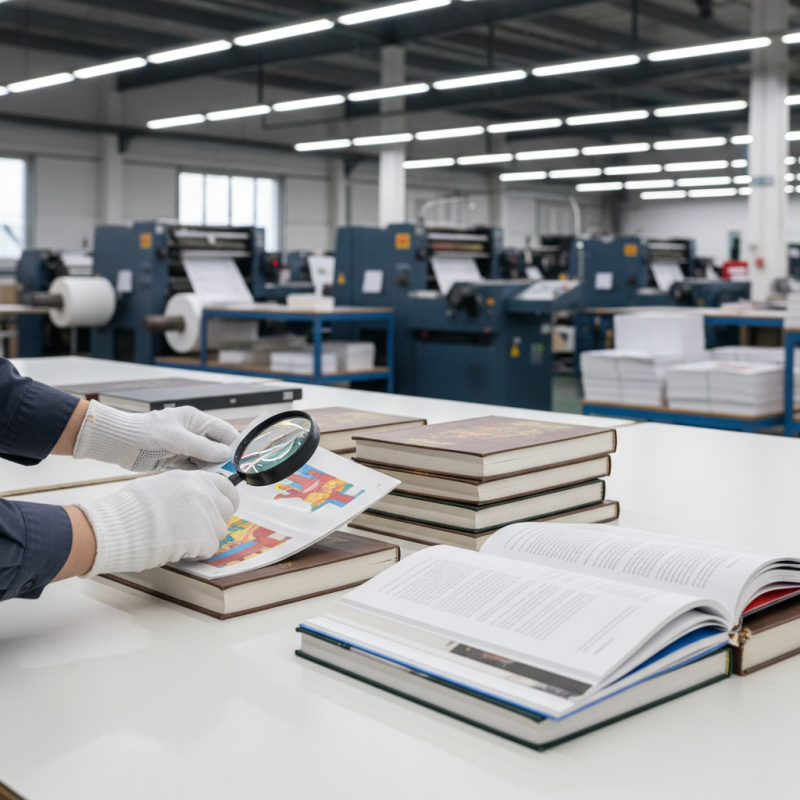
Start with a magnifying glass. This helps check for tiny defects in the text and images. Look for any color inconsistencies or blurriness. A color calibration tool is also vital. It ensures the printed colors match the digital design. Misalignments often go unnoticed without proper examination. Create a checklist for common issues to catch.
Another useful technique is the physical inspection of a sample print. Pay attention to the paper quality. Is it sturdy enough? Check for any warped pages or misprints. A simple light test can reveal issues like ink smudging or fading. Use good lighting to notice flaws easily.
Tips: consider a second set of eyes. Fresh perspectives often spot issues you missed. Always keep a diary of defects found during inspections. This helps to improve the process over time. Sometimes you won’t catch everything. Reflect on missed errors for future projects.
Establishing Quality Standards for Book Printing Output
Establishing quality standards for book printing output is vital in the publishing industry. These standards guide printers to deliver consistent results. A clearly defined quality benchmark helps in assessing print colors, clarity, and overall design sharpness. Each batch of books should meet these set expectations to ensure customer satisfaction.
Inspecting the printed materials involves multiple stages. The initial examination often includes checking paper quality and print alignment. However, it’s easy to overlook small defects without a thorough review process. Sometimes, the colors may appear slightly off, or the pages could be misaligned. Regular training for printing staff can help minimize these errors.
Feedback loops are crucial for continuous improvement. Engaging with authors and readers can reveal unnoticed issues. Open communication about print quality promotes better practices. Quality assurance is an ongoing journey, not a destination. Each print job offers lessons learned that should be documented for future reference. Identifying weak spots leads to refining the inspection process, enhancing the overall quality.