Why Are Packaging Materials Essential for Sustainable Business Practices?
In today’s world, sustainable business practices are more crucial than ever. Packaging materials play a vital role in this shift. Experts like Dr. Emily Smith, a leading authority in sustainable packaging, emphasize, "The choice of packaging materials can either make or break a company's commitment to sustainability."
Choosing the right packaging materials influences a brand's ecological footprint. Companies face challenges in balancing cost and sustainability. Some materials are recyclable, yet they may not protect products adequately. Others reduce waste but come with a higher price tag. The dilemma raises questions about priorities in business decisions.
Innovation in packaging materials is essential for progress. Businesses must rethink their strategies instead of following traditional methods. The concept of sustainable packaging isn't just a trend; it’s a necessary evolution. As organizations navigate this complex landscape, the need for thoughtful choices becomes apparent. The industry must engage in continuous reflection and improvement.

The Role of Packaging Materials in Sustainable Business Practices
Packaging materials play a crucial role in sustainable business practices. They not only protect products but also influence consumer choices. According to a report by the World Economic Forum, around 90% of consumers are more inclined to buy products with sustainable packaging. This highlights the growing demand for eco-friendly materials in today's market.
Using recyclable or biodegradable materials can significantly reduce waste. For instance, companies that switch to sustainable packaging see a reduction in their carbon footprint by up to 30%. However, many businesses still face challenges in sourcing these materials. The cost of sustainable options can be higher, which may deter smaller companies from making the transition.
Moreover, while companies commit to sustainability, they must avoid greenwashing. Transparency is vital; consumers are becoming savvy and demand authenticity. A study indicates that 70% of consumers distrust brands that make exaggerated claims about their environmental impact. It's essential for businesses to reflect on their packaging choices. Are they genuinely sustainable, or just a marketing tactic? Engaging in honest practices can foster stronger customer loyalty.
Types of Eco-Friendly Packaging Materials Available Today
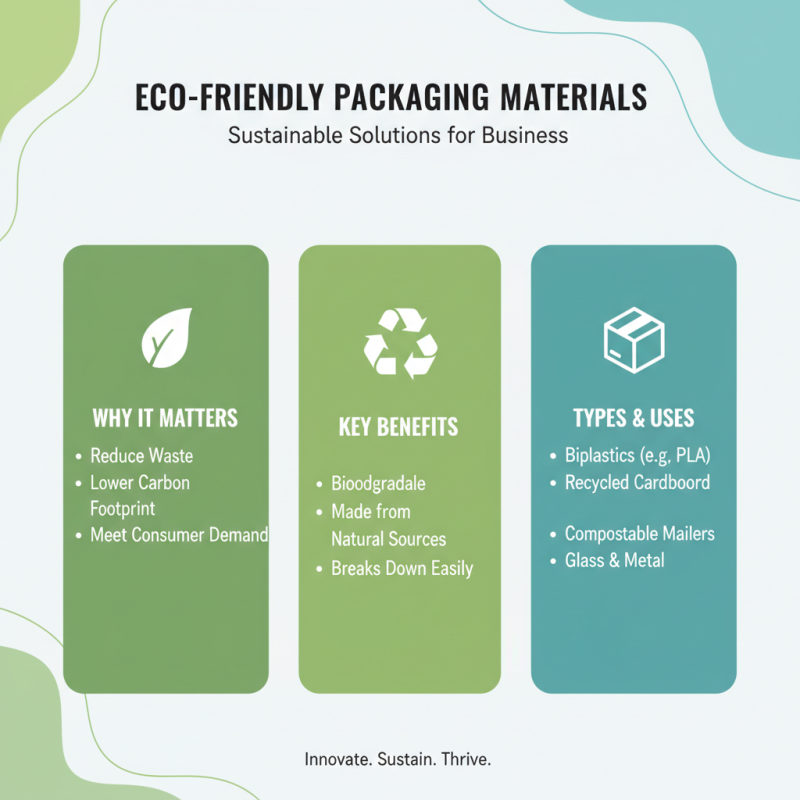
Eco-friendly packaging materials have become crucial for businesses aiming for sustainability. These materials help reduce waste and lower carbon footprints. Today, various types are available, each with unique benefits. Biodegradable plastics, made from natural sources, break down more easily than conventional plastics. Companies can use these materials to meet eco-conscious consumer demands.
Another option is recycled paper. It is versatile and can be used for boxes, bags, and filler. This choice not only minimizes tree cutting but also promotes recycling. However, businesses must ensure that the paper they use is sourced responsibly. There is a risk of greenwashing if they don't. Using plant-based inks on these materials can also enhance their eco-friendliness.
Mushroom-based packaging is an emerging alternative. It composts easily and is renewable. Yet, it may not provide the same durability as traditional options. This showcases the balance businesses must achieve. Adopting these materials can be a great step, but organizations should carefully evaluate their overall impacts. Not all eco-friendly choices fit every product or market. The challenge lies in finding the right balance.
How Sustainable Packaging Reduces Environmental Impact
Sustainable packaging plays a key role in reducing environmental impact. It focuses on using materials that are recyclable, biodegradable, or made from renewable resources. This approach helps decrease waste and pollution. For example, paper packaging made from recycled materials cuts down on deforestation. Every little change counts.
Choosing the right materials can be challenging. Some companies overlook the importance of proper waste management. They may opt for cheaper options without understanding their long-term effects. To minimize your footprint, consider compostable materials for food products. Using minimal packaging can also help reduce resource consumption.
Tips: Always check for certifications. Look for eco-labels on your packaging materials. These can guide you towards more sustainable options. Engage with partners who share your sustainability goals. This collaboration strengthens your efforts.
The Economic Benefits of Using Sustainable Packaging
Sustainable packaging offers numerous economic benefits for businesses. Companies that adopt eco-friendly materials can reduce costs in the long run. For example, biodegradable packaging often costs less when considering waste disposal fees. This is an area many overlook, thinking only of initial expenses.
Moreover, sustainable packaging can enhance a brand's image. Customers appreciate companies that prioritize the environment. This can lead to increased sales and customer loyalty. However, not every business fully understands this benefit. They may see sustainable options as a luxury rather than a necessity.
Yet, the transition to sustainable packaging isn’t always smooth. Many companies struggle with finding reliable suppliers. Some materials may also lack durability compared to traditional options. Businesses need to weigh these factors carefully. The right choices can lead to significant financial rewards and customer satisfaction. Balancing cost, quality, and sustainability is essential for any modern enterprise.
Economic Benefits of Using Sustainable Packaging
Consumer Awareness and Demand for Responsible Packaging Choices
Consumer awareness is rising. People are more informed about environmental issues. They want products with responsible packaging. This shift is pressuring businesses to adapt. It's not just a trend; it's becoming a necessity. Companies must rethink their materials.
Biodegradable options are gaining popularity. However, these materials can sometimes be more expensive. It's a challenge for many small businesses.
Packaging plays a vital role in brand identity. Yet, it also contributes significantly to waste. Many consumers feel conflicted. They love attractive packaging but worry about sustainability. Brands must find a balance.
Clear labeling is essential. Transparency will build trust. If consumers understand the impact, they are more likely to support eco-friendly choices.
Not every solution is perfect. Some biodegradable materials still have limitations. Recycling can be complicated and confusing. Businesses need to educate customers. They must address the challenges openly.
Honest communication can lead to better consumer choices. As awareness grows, so does the responsibility to improve practices.