What Are Stock Boxes and How to Choose the Best Ones?
In the world of logistics and packaging, stock boxes play a crucial role. Johnathan Reese, a renowned expert in packaging solutions, states, "Choosing the right stock boxes can streamline your operations significantly." These boxes come in various materials and sizes, catering to different needs.
Selecting the best stock boxes requires careful consideration. Think about the items being packaged. Fragile products need sturdier materials. The dimensions of the boxes also matter. A snug fit is essential to minimize movement, yet it cannot be overly tight. This balance is often hard to achieve.
Another aspect to ponder is the cost. High-quality stock boxes may seem expensive upfront. However, they can reduce losses due to damage. Reflecting on your packaging strategy can lead to better choices. The right stock boxes not only protect your products but also enhance your brand's image.
What Are Stock Boxes and Their Purpose in Shipping?
Stock boxes play a crucial role in shipping, providing essential protection during transport. These boxes come in various sizes and materials to suit different needs. According to industry reports, over 90% of goods transported globally are housed in boxes designed for shipping. This statistic underscores their importance in logistics.
When choosing stock boxes, it’s vital to assess the specific requirements of your items. For fragile products, opt for double-walled boxes for added security. Conversely, lightweight items can be paired with single-walled options, ensuring cost-effectiveness. Additionally, consider the box dimensions. A proper fit can prevent shifting during transit, reducing the risk of damage.
However, not all stock boxes are created equal. Some may not hold up well under varying weather conditions. Research shows that nearly 15% of shipping damages are due to inadequate packaging. Reflect on your choices and seek sustainable options. Using recycled materials can minimize your environmental impact. Evaluate durability and suitability more critically.
Stock Box Dimensions and Their Usage in Shipping
Key Factors to Consider When Choosing Stock Boxes
When selecting stock boxes, several key factors come into play. Start with size. Determine the dimensions needed for your items. Too big can lead to wasted space. Too small may cause damage during transport. Consider the weight capacity as well. Not every box is designed to carry heavy loads. This can lead to unexpected failures.
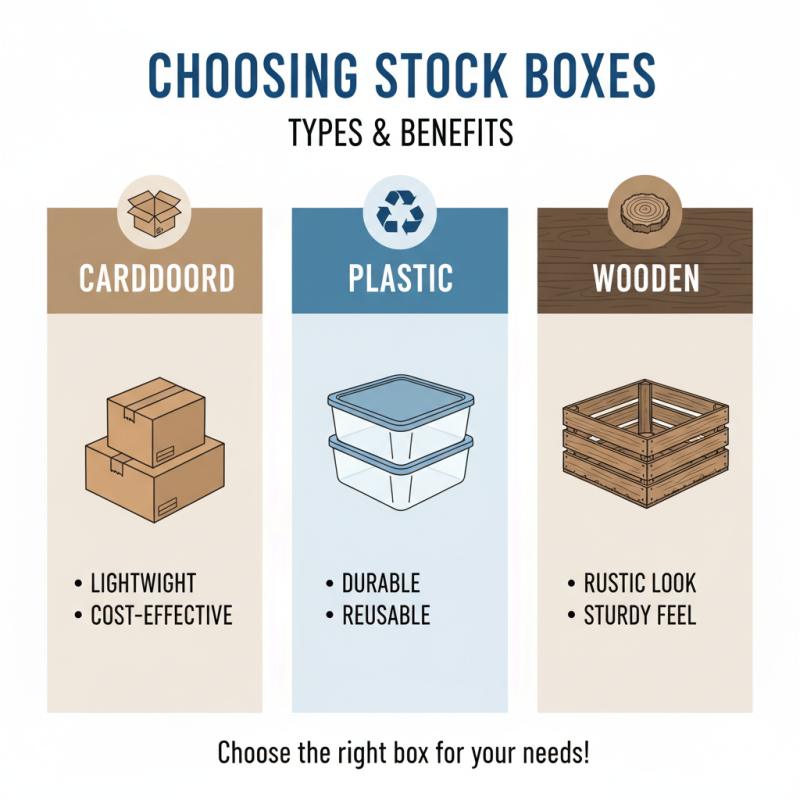
Next, think about the material. Cardboard is often lightweight and cost-effective. However, it may not provide the best protection. Plastic alternatives offer more durability. But, they can be pricier. Assess what your items require. Are they fragile? Then choosing a box that offers extra cushioning is essential.
Finally, aesthetics may be a factor to weigh. While function is key, appearance matters too, especially for retail. A clean, professional look can boost a brand’s image. However, remember that looks without functionality can backfire. Reflect on your needs and priorities. Balancing all these factors can be challenging, leading some to overlook important details. Make a checklist to guide you. This simple tool can help ensure thoughtful selection.
Benefits of Using High-Quality Stock Boxes
High-quality stock boxes offer numerous benefits for businesses and individuals alike. They provide sturdy protection for items during storage and transportation. With a variety of sizes and materials, these boxes cater to different needs. Choosing the right box can significantly affect the safety of your products. A stiff cardboard box can handle heavier items better than a flimsy one. Pay attention to the specifications, such as weight capacity and design.
Using durable stock boxes can enhance the presentation of your products. A well-chosen box communicates professionalism to clients. It creates a positive first impression, which can influence purchasing decisions. However, some may overlook the importance of quality in their rush to save on costs. Choosing cheaper options might lead to damage, resulting in loss. It’s crucial to balance cost with quality. Reflecting on past experiences may highlight the impact of poor storage solutions.
Moreover, investing in high-quality stock boxes can lead to long-term savings. Think of reduced returns and replacements, as well as customer satisfaction. Sustainable options also exist, which can appeal to environmentally conscious consumers. Despite this, not everyone prioritizes these factors. Some might still favor aesthetics over durability. It raises questions about decision-making processes in packaging. Would you choose style over substance?
Tips for Finding the Best Stock Boxes for Your Needs
When searching for stock boxes, it’s crucial to assess your specific needs. Consider the items you plan to store. Will you be handling fragile items or heavier tools? Knowing the weight capacity is essential. Look for boxes that offer durability without being overly bulky. Sometimes, cheaper options may not be the best choice. Investing in quality can save you money in the long run.
Think about the size as well. Not all stock boxes fit neatly into your space. Measure your storage area before making a decision. A box that's too large might waste space, while one that’s too small could be inadequate. Additionally, some boxes come with dividers or compartments. If you’re organizing small parts, these features could be beneficial.
Lastly, remember that aesthetics matter. While texture and color may seem secondary, they can impact the overall look of your storage. Reflect on how the boxes will fit into your environment. It’s easy to overlook this detail, but a mismatched design can affect your space's harmony. Choose wisely, as the right stock box can enhance both function and style.