7 Tips for Buying Canned Crushed Tomatoes Wholesale
Buying Canned Tomato Crushed wholesale can look simple: compare case prices, choose a supplier, and place an order. Yet a low unit price means little if cans arrive dented, the texture is too thin, or batches perform differently. A sound purchase begins with your kitchen’s needs. Consider recipe volume, preferred consistency, pack size, storage space, and delivery frequency. Ask suppliers for product specifications, ingredient lists, and samples when available. Then test the tomatoes in a familiar sauce, not just straight from the can. Small details matter. A bright label cannot show how the product behaves after twenty minutes of simmering.
This guide previews seven practical checks, including comparing prices by net weight, reviewing packaging, confirming order quantities, and assessing supplier reliability. An illustrative, fictional canned-tomato sourcing expert, Elena Rossi, might put the key principle this way: “Buy for performance in the pot, not just price on the invoice.” Treat that as a useful reminder, not a substitute for product testing. Ask how the product’s texture and flavor suit your recipes, and keep notes from each sample. Check that the quote clearly states case size, delivery terms, and any minimum order. Wholesale buying is not only a math exercise. Clear records and steady communication matter, too. Still, no checklist replaces a real kitchen test. That step is easy to skip, especially when a quote looks attractive. Don’t.
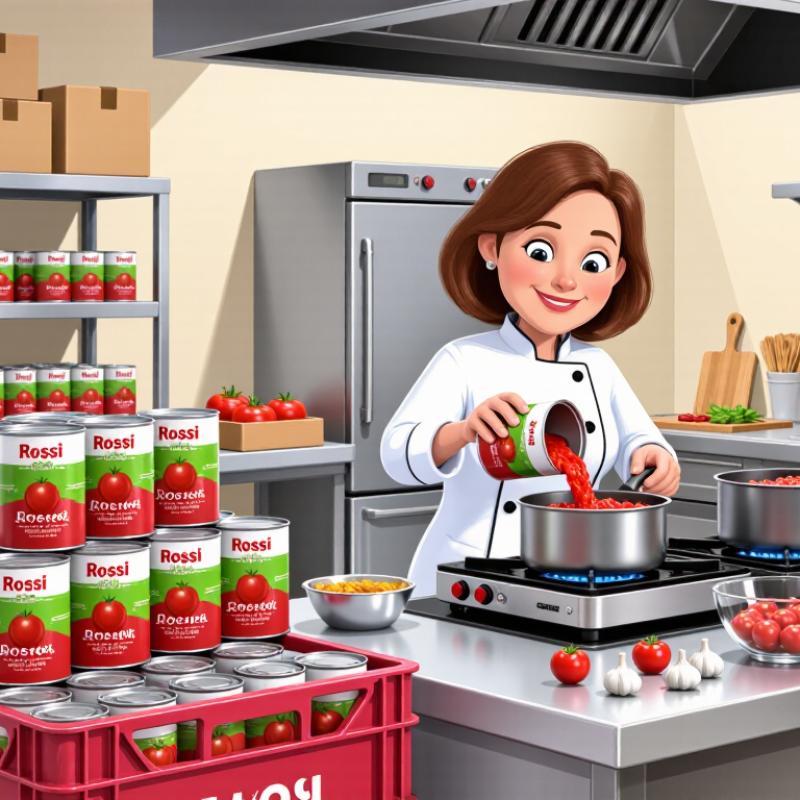
Assess Your Wholesale Needs and Required Order Volume
Tip 1: Measure demand before requesting quotes. Review at least 8–12 weeks of invoices, then calculate weekly case use. Separate crushed tomatoes used in sauces, soups, and prep batches. Check can size, drained yield, and menu changes; a 28-ounce can and a large food-service can are not interchangeable. FAOSTAT’s 2022 crop-production data records about 186 million metric tonnes of tomatoes worldwide. That figure reflects all tomatoes, not canned supply, but it shows why broad crop totals cannot replace supplier-specific availability checks.
Tip 2: Turn usage into an order quantity. Multiply average weekly cases by the weeks you need covered, then subtract usable stock on hand. Add a modest buffer for delivery delays or a busy service period. Keep a buffer, but avoid ordering by pallet just because the unit price looks lower. Cans take shelf space, and slow turnover ties up cash.
Tip 3: Confirm the supplier’s minimum order, case pack, lead time, and delivery schedule before setting volume. USDA ERS’s Food Availability data system can help you monitor tomato-product trends; use it as market context, not a forecast for your kitchen. I would not treat one month’s sales as a perfect baseline. A promotion, menu change, or unusually quiet week can skew the estimate. Recheck actual usage after each delivery.
7 Tips for Buying Canned Crushed Tomatoes Wholesale - Assess Your Wholesale Needs and Required Order Volume
| Example Operation | Servings per Week | Tomatoes per Serving | Estimated Monthly Use | Example Case Configuration | Planning Buffer | Suggested Order |
| Small café | 180 | 2.5 oz | 1,949 oz | 6 cans × 106 oz (636 oz/case) | 10% | 4 cases |
| Pizzeria | 500 | 3 oz | 6,495 oz | 6 cans × 106 oz (636 oz/case) | 10% | 12 cases |
| Catering kitchen | 320 | 4 oz | 5,542 oz | 12 cans × 28 oz (336 oz/case) | 15% | 19 cases |
| Institutional kitchen | 900 | 2 oz | 7,794 oz | 6 cans × 106 oz (636 oz/case) | 10% | 14 cases |
| Prepared-food producer | 1,200 | 5 oz | 25,980 oz | 6 cans × 106 oz (636 oz/case) | 10% | 45 cases |
Planning examples only: monthly use is estimated as servings per week × ounces per serving × 4.33 weeks. Suggested orders add the stated buffer, divide by the example case size, and round up to whole cases. Confirm the product’s net weight, cans per case, supplier minimum order, delivery lead time, and available storage before ordering.
Compare Suppliers, Certifications, and Product Consistency
When comparing suppliers of canned crushed tomatoes, use the same written specification for each quote. Include pack size, ingredient list, expected delivery schedule, and key quality measures such as color, texture, and soluble solids. Ask suppliers how they control variation between production lots. A low price means little if one shipment is watery and the next is thick.
Review certifications carefully. Request current documents and confirm that their scope covers the facility and processes involved in your order. A certificate alone does not show how a supplier handles every quality issue. Ask for recent test reports, traceability details, and a clear process for reporting defects. Small details matter. Check whether quoted lead times include production and transit, not just dispatch.
Request samples from more than one lot when possible, then compare them using the same method. Note the drained texture, seed distribution, aroma, and appearance after opening. Keep a retained sample from approved shipments as a reference. A spreadsheet helps, but it can create false confidence if measurements are inconsistent. People also judge color differently under warm warehouse lights. Set practical acceptance limits with the supplier, and revisit them after the first few deliveries. Some variation is normal; unexplained swings deserve a closer look.
Check Ingredients, Can Size, Packaging, and Tomato Quality
When comparing canned crushed tomatoes, read the ingredient list rather than relying on front-label claims. A short list may include tomatoes, tomato juice, salt, or an acid regulator. Check whether added salt fits your recipes, especially if sauces are reduced during cooking. “Crushed” can describe different textures, so inspect the product specification or request a sample. A quick check helps.
Choose can sizes around your actual kitchen workflow. Large cans can lower handling costs, but opened tomatoes need prompt, safe refrigeration and may spoil before a small kitchen uses them. Compare net weight, drained weight where provided, and the number of portions each can realistically supply. Check case dimensions and weight, too; awkward cartons can slow receiving and storage. Packaging matters.
Look for intact cans without deep dents, bulging ends, leaks, or damaged seams. Confirm that cases are sealed, dry, and labeled with lot information and a best-before date. For tomato quality, assess color, aroma, seed content, and consistency after opening a sample. A bright red appearance alone is not proof of good flavor. Taste it in a simple sauce, since herbs and seasoning can hide defects. Natural variation happens, and one sample may not represent every case; record the lot and report notable differences to the supplier.
Calculate Unit Costs, Shipping Fees, and Bulk Discounts
A low case price can be misleading when buying crushed tomatoes wholesale. Compare the usable tomato weight, not just the number of cans. Calculate the product cost per kilogram by dividing the case price by its total net weight. Keep it simple. Then add freight, fuel surcharges, and any delivery or pallet fees. Divide the full delivered cost by the same net weight to find your true unit cost.
Shipping can change the comparison quickly. A supplier farther away may offer cheaper cases but higher freight, especially for a small order. Ask for a written quote that states the destination, shipment size, and accessorial fees. Check whether the quote assumes a full pallet. A few extra cases might push an order into a higher shipping bracket—or leave you paying for unused space. The details matter.
Bulk discounts deserve the same careful arithmetic. Compare each price break against the additional cases required, then calculate the savings per kilogram after shipping. A discount is not useful if the extra stock ties up cash or exceeds your storage capacity. Check can dimensions, pallet counts, shelf life, and policies for damaged goods. I would recheck the numbers before ordering; it is easy to overlook one fee. Ask for a sample or small trial order when practical, since texture and acidity may differ from what your kitchen needs.
Plan Delivery, Inventory Rotation, and Proper Storage
Wholesale orders need a delivery plan before the truck arrives. Ask suppliers for case counts, pallet configuration, and realistic lead times, then match arrivals to receiving hours and available dry storage. Check each pallet for crushed seams, leaks, swelling, and wet cartons; photograph damage before signing. Small details matter. Record lot codes and best-by dates at receipt, not later, when paperwork gets misplaced.
Set a first-expiring, first-out rotation, with older cases placed at the front and newer stock behind them. USDA FoodKeeper guidance gives commercially canned tomatoes a 12–18-month best-quality window when stored properly. Treat that as a quality guide, not permission to ignore damaged cans or poor conditions. Keep cases in a cool, dry area away from floors, drains, and direct sunlight; USDA guidance commonly recommends 50–70°F for canned food storage. Measure the warmest shelf, not just the room near the thermostat. FAO’s 2023 food-loss report estimates that 13.2% of food was lost between harvest and retail in 2016, a reminder that supply planning matters beyond the warehouse. Still, ordering a little extra can backfire if slow-moving cases sit untouched. Review weekly usage and adjust the next order; the forecast will be imperfect, and that is worth admitting.
7 Tips for Buying Canned Crushed Tomatoes Wholesale
Plan deliveries, rotate inventory using FIFO (first in, first out), and store unopened cans in a cool, clean, dry place. The chart shows typical best-quality storage windows—not expiration dates—for unopened commercially canned foods.
For best quality, use canned tomatoes within 12–18 months. Check can condition and date labels, follow supplier guidance, and avoid storing cans where they may become wet, very hot, or freeze. Quality guidance is not a guarantee of safety.