What is UVLED Flatbed Printing and How Does it Work?
UVLED Flatbed Printing has gained attention in various industries for its unique advantages. Richard Chang, a leading expert in digital printing, once said, “The clarity and precision of UVLED Flatbed Printing redefine what’s possible in customization.” This method uses ultraviolet light to cure inks instantly, allowing for vibrant and durable prints on various substrates.
Unlike traditional printing, UVLED Flatbed Printing creates less waste. The process is efficient and minimizes harmful solvents. However, the technology is not without its challenges. Some users find the initial investment high and may struggle with the learning curve. Additionally, curing times can vary based on the material.
Yet, the benefits often outweigh these hurdles. With high versatility, UVLED Flatbed Printing enables intricate designs on wood, glass, and metal. The impact on marketing and branding is significant. Businesses can produce eye-catching visuals that attract customers, driving sales. As the industry evolves, it's clear that UVLED Flatbed Printing will play an essential role in the future of custom printing.
What is UVLED Flatbed Printing?
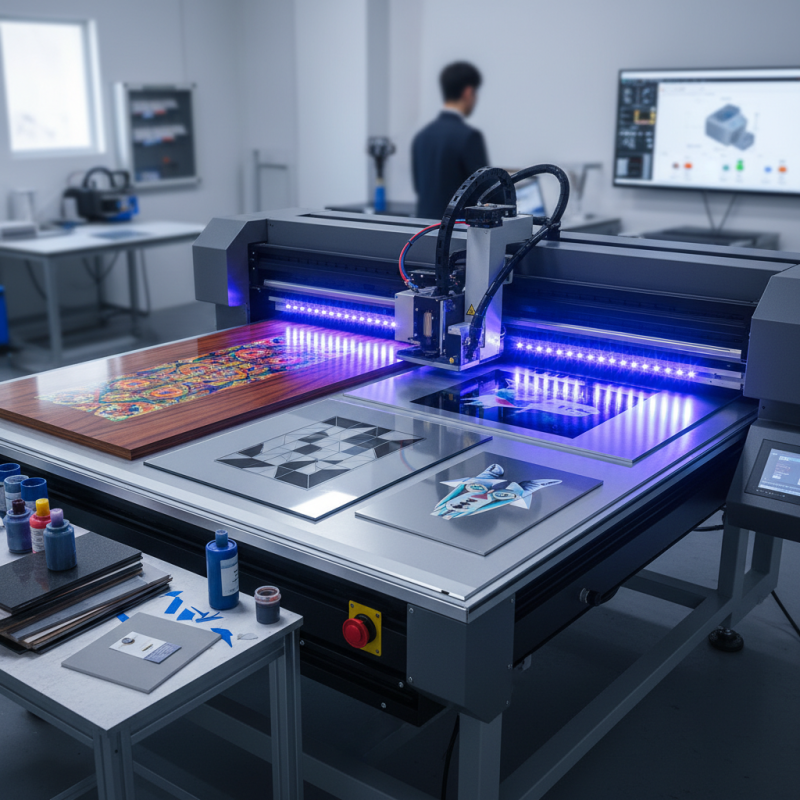
UVLED flatbed printing is an innovative printing technology. It utilizes ultraviolet light to cure or dry ink as it is printed. This method allows for high-quality images on various materials. Wood, metal, glass, and plastic can all be processed with this technology. The flatbed design keeps the media flat, ensuring accurate and consistent prints.
Many users appreciate the speed of UVLED flatbed printing. The curing process is quick, allowing for faster production times. However, users should be aware of potential challenges. Set up may require careful calibration. Not all inks are compatible with every surface. Testing is crucial before starting a project.
Tip: Always choose the right ink for your material. This can improve adhesion and color vibrancy. Make sure to check for ink compatibility with your UVLED printer.
Tip: Regular maintenance of the printer is key. Dust and debris can affect print quality. Clean the machine frequently to avoid issues.
While UVLED flatbed printing offers many benefits, it’s important to remain mindful of potential pitfalls. Experimenting with different media can yield surprising results. Yet, some materials may not react well to UV curing, leading to imperfections. Always be ready to adapt your approach.
Key Components of UVLED Flatbed Printers
UVLED flatbed printers are revolutionizing the printing industry. They rely on ultraviolet light to cure ink almost instantly. This technology enables high-quality prints on various surfaces. The key components in these printers significantly impact performance and output quality.
The print head is a vital element. It applies the ink onto the material. Most machines today use piezoelectric technology, which helps in precise ink distribution. The UV LED lamps are equally important. They emit UV light to cure the ink right after application. This results in vibrant colors and sharp details. Reports suggest that UV printing can reduce drying time by up to 50%. This efficiency is a game changer for busy print shops.
Tip: Always check the compatibility of the UV LED printer with the materials you plan to use. Experimenting with different substrates can yield surprisingly good results.
Another key component is the vacuum table. It holds materials in place, ensuring consistent printing quality. Many users underestimate its importance. An unstable workpiece can lead to misprints and wasted materials. According to recent studies, 20% of printing errors relate to improper material placement.
Tip: Regularly clean the vacuum table. Dust and debris can affect adherence and print precision. A clean surface equals a more accurate print.
How UVLED Flatbed Printing Differs from Traditional Printing
UVLED flatbed printing is revolutionizing the printing industry. This method uses ultraviolet light to cure ink as it’s printed. Unlike traditional printing, which often relies on heat or air drying, UVLED technology cures instantly. This can significantly speed up production times. According to a report by Smithers Pira, the digital printing market is set to grow at a CAGR of 7% until 2024, with UV printing leading the segment.
Traditional printing processes use various chemicals and can lead to waste. In contrast, UVLED printing produces less waste and is more environmentally friendly. The inks are often free from volatile organic compounds (VOCs). This is crucial for businesses aiming to reduce their carbon footprint. However, an important factor to consider is the up-front cost. UVLED equipment can be expensive. Companies need to weigh the benefits against their budgets.
Additionally, UVLED printing provides better adhesion on diverse materials. This includes wood, metal, and glass. Traditional techniques may struggle with these substrates. However, the learning curve for UVLED technology can be steep. Some operators may find it challenging to master. It’s vital to invest in training to avoid errors. The promise of UVLED printing is great, but execution remains a hurdle for many.
The Printing Process in UVLED Flatbed Technology
UVLED flatbed printing represents a modern approach to printing that utilizes ultraviolet light to cure ink. The process starts with a flat surface where materials, like wood or metal, are placed. This versatility allows for various applications across multiple sectors.
In the printing process, high-quality UV LEDs emit light that instantly cures the ink on the surface. The design is printed layer by layer. Each layer is exposed to UV light, solidifying the ink rapidly. This offers advantages like vibrant colors and sharp details. It's mesmerizing to watch as the ink transitions from liquid to solid in moments. However, factors like uneven surfaces can impact print quality.
The setup often requires careful adjustment. Misalignment can lead to poor results. Operators must pay attention to the material's texture. Some surfaces may not adhere to the ink well, requiring testing beforehand. This stage demands precision, and mistakes can be costly. Each print run becomes a lesson learned, emphasizing the need for experience and adaptation.
What is UVLED Flatbed Printing and How Does it Work? - The Printing Process in UVLED Flatbed Technology
| Feature | Description | Advantages |
| Flatbed Printing | Printing directly onto flat substrates. | Versatility for various materials including wood, metal, glass, and more. |
| UVLED Technology | Uses UV light to cure inks instantly, providing quick turnaround. | Faster drying times compared to conventional printing methods. |
| Color Options | Available in a wide range of colors including special inks like white and clear. | | High-quality prints with vibrant colors and effects. |
| Precision | High-resolution printing with detailed images and text. | Ideal for signage, graphics, and custom design projects. |
| Sustainability | Less waste due to the precise application of inks. | Reduced environmental impact compared to traditional methods. |
Applications and Benefits of UVLED Flatbed Printing
UVLED flatbed printing is revolutionizing various industries with its versatility. This technology enables printing directly on flat surfaces, ranging from wood to glass and metal. With speeds up to 1,000 square feet per hour, it streamlines production processes. Reports indicate that the UV printing market is expected to grow by 10% annually, highlighting its rising importance.
One significant application is in signage and displays. Businesses are utilizing UVLED printing to create vibrant, durable wall graphics that withstand harsh conditions. It's also popular for promotional materials. The ability to print high-quality images directly onto substrates reduces production times. Moreover, UVLED inks are environmentally friendly, emitting fewer volatile organic compounds (VOCs).
Despite its advantages, challenges arise. Not every surface adheres well to UV printing. Some materials may require pre-treatment, adding complexity. Additionally, the technology can be costly to implement for smaller enterprises. As businesses adopt UVLED printing, ongoing evaluations of its effectiveness are essential. Balancing quality and cost remains a crucial consideration for many.