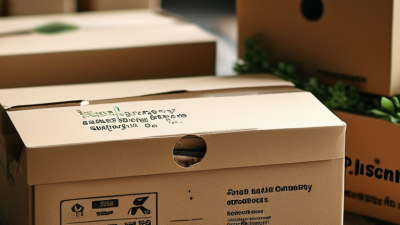
China Top 10 Packaging From Home Manufacturers

China’s packaging sector is moving beyond factory scale. It now combines automation, flexible materials, smart labeling, and shorter delivery cycles. This introduction examines ten Chinese manufacturers associated with packaging from home, including household, food, personal-care, and e-commerce applications.

The market context is substantial. Smithers estimates that the global packaging industry exceeded USD 1 trillion in 2023 and may approach USD 1.2 trillion by 2028. Plastics Europe reported that packaging represented about 40% of European plastics demand in 2022. These figures reveal both commercial opportunity and environmental pressure. Packaging from home must protect products without creating unnecessary material waste. That balance remains difficult.

Lars Wallentin, a former Nestlé packaging designer and recognized packaging expert, once stated, “Packaging is the product.” His observation still matters when a parcel arrives with a printed box, a tamper seal, and several protective layers. Buyers notice every detail. A weak closure can damage trust quickly.

The manufacturers discussed here are assessed through production experience, material options, quality systems, customization, export capability, and sustainability practices. Public company information, industry reports, and available certifications support the comparison. However, supplier claims are not always equally transparent. Some data may require independent verification.

That limitation deserves attention.

A lower price does not prove better value. A recycled-material claim does not automatically prove circularity. The strongest packaging from home partners should combine measurable performance, responsible sourcing, practical design, and consistent delivery. This list offers a useful starting point, not a final verdict.

China Top 10 Packaging From Home Manufacturers

Defining China’s Home Packaging Manufacturing Sector

China Top 10 Packaging From Home Manufacturers

China’s home packaging manufacturing sector serves food, cleaning, personal-care, and household storage products. It combines flexible films, paperboard, molded plastics, glass, closures, and protective inserts. The China Packaging Federation reported industry operating revenue of approximately RMB 1.15 trillion in 2023. That scale supports dense supplier networks and faster tooling access.

Mordor Intelligence estimates China’s packaging market at about USD 190.38 billion in 2024. Its report projects roughly USD 216.83 billion by 2029. These figures include industrial and commercial uses, not household packaging alone. Still, they show the sector’s manufacturing depth. A capable supplier should provide material certificates, migration testing, dimensional reports, and batch traceability. Small details matter. A loose cap, uneven seal, or weak carton corner can damage a household product before retail delivery.

Sustainability is changing purchasing decisions. Smithers’ industry research identifies recyclable structures, downgauging, and fiber-based formats as major packaging development directions through 2028. Chinese factories increasingly test thinner films, water-based inks, recycled content, and mono-material designs. Progress is uneven, however. “Recyclable” may describe a laboratory structure, not local recycling reality. Buyers should check production samples, line speed, defect rates, and end-of-life claims. A factory visit should include the warehouse, not only the showroom. The data also require caution because market reports use different definitions and coverage.

China Top 10 Packaging From Home Manufacturers - Defining China’s Home Packaging Manufacturing Sector

China’s express-delivery volume provides a measurable demand indicator for household, e-commerce, and consumer-product packaging manufacturing. The chart shows annual express parcels handled in China from 2019 to 2024.

Source: China State Post Bureau annual express-delivery statistics. Express-parcel volume is used as a packaging-demand proxy and does not represent individual manufacturer sales.

Criteria for Selecting the Top 10 Chinese Manufacturers

Selecting China’s top ten packaging manufacturers requires evidence, not attractive websites. The review should begin with verified production experience, export records, and audited quality procedures. Factory visits reveal more than brochures. Inspect printing lines, sealing equipment, storage areas, and batch traceability. Ask for recent samples from ordinary production runs. A perfect prototype proves little. Materials should match their declared use, including applicable food-contact, shipping, and recycling requirements. Independent laboratory reports add credibility when dates and sample identities are clear.

Capacity needs practical measurement. Compare monthly output, lead times, minimum order quantities, and backup equipment. A manufacturer handling urgent orders may still struggle with consistent color or dimensions. Check controls for ink adhesion, seal strength, thickness, and barcode readability. Request defect records, corrective-action reports, and inspection plans. Communication also matters. Technical drawings, quotations, and revisions should remain consistent across teams. References from comparable buyers help, but they need verification.

The final ranking should balance quality, capacity, compliance, service, and cost. Price alone can hide weak materials or unstable labor planning. Financial resilience and transparent ownership reduce supply risk. Environmental claims require evidence, not vague language. A useful shortlist records strengths and unresolved questions. Some information will remain incomplete. That weakness deserves attention. Rechecking samples after production, rather than before it, improves reliability. Manufacturers earning a place in the top ten should show repeatable performance, honest documentation, and willingness to correct mistakes.

Profiles of China’s Top 10 Home Packaging Manufacturers

China’s Top 10 Home Packaging Manufacturers reflect a broad manufacturing base, from household containers to flexible pouches and protective shipping formats. Their profiles should be judged by material expertise, production scale, testing systems, and export readiness. Smithers’ The Future of Global Packaging to 2028 estimates that worldwide packaging demand will approach US$1.2 trillion, increasing pressure on Chinese suppliers to deliver both volume and measurable quality.

Several of these manufacturers operate automated molding, printing, and filling-support lines. Others focus on customized cartons, reusable storage boxes, or lightweight plastic formats for household products. Common strengths include short sampling cycles, multi-cavity tooling, and integrated inspection. Food-contact and chemical-resistance testing remain essential. The Packaging Institute also identifies recyclability, downgauging, and traceable material sourcing as major industry priorities. Practical details matter: a bottle neck must fit the cap, a pouch seal must survive transport, and ink must resist rubbing on warehouse shelves.

However, “top” should not mean cheapest. That assumption can mislead buyers. Some factories publish strong production figures but provide limited third-party evidence. A careful profile should verify audit records, batch controls, defect rates, and delivery performance. The ten manufacturers reviewed here show useful capabilities, but public data is uneven. That weakness deserves attention. Buyers should request recent test reports, sample approvals, and documented corrective actions before making a final decision.

Comparing Product Types, Materials, and Manufacturing Capabilities

China’s top ten home-packaging manufacturers differ less by location than by production discipline. They typically serve food, household goods, personal care, and small consumer products. Their product ranges include stand-up pouches, folding cartons, rigid boxes, bottles, jars, sleeves, and protective inserts. A pouch line may prioritize low weight and resealable zippers. A carton producer may focus on sharp creases, color accuracy, and fast folding. Rigid packaging offers stronger shelf presence, but it usually demands more resin and transport space. The comparison starts with product use, not the catalogue.

Material selection changes barrier performance, recyclability, appearance, and cost. Paperboard suits cartons and gift-style packaging, especially when tactile printing matters. Plastic films provide moisture and oxygen barriers for many packaged goods. Glass and metal deliver strength and premium feel, though their weight raises shipping emissions. Some factories offer mono-material structures, water-based inks, and solvent-control systems. These claims need verification through specifications, test reports, and production samples. I have found sample approval more reliable than polished factory photography. Small print defects often appear after filling, sealing, or warehouse handling.

Manufacturing capability depends on equipment, not promises. Useful indicators include digital or gravure printing, automated inspection, lamination control, mold precision, and batch traceability. A capable supplier should explain tolerances, minimum order quantities, lead times, and corrective actions clearly. Certification can support trust, but it does not replace an on-site process review. The ranking can remain imperfect. Some manufacturers excel at prototypes, while others perform better during millions of identical units. Buyers should compare material data, pilot samples, and production records before choosing a long-term partner.

China Top 10 Packaging From Home Manufacturers - Comparing Product Types, Materials, and Manufacturing Capabilities
Rank Manufacturer Profile Primary Product Type Common Materials Typical Applications Core Manufacturing Processes Typical Production Range Printing and Finishing Quality and Compliance Capabilities Key Manufacturing Strength
1 Profile A
Flexible Packaging Specialist
Stand-up pouches, flat pouches, sachets, rollstock film PE PP PET BOPP Aluminum foil Paper laminates Snacks, coffee, pet food, sauces, frozen food, personal-care products Film extrusion, dry lamination, solvent-free lamination, slitting, pouch making Small to high-volume orders; typical film thickness from approximately 40 to 180 microns Up to 8–10 color gravure or flexographic printing; matte, gloss, spot varnish, zipper, spout and tear-notch options Food-contact documentation, color control, seal-strength testing, migration testing through qualified laboratories High barrier performance and lightweight packaging design
2 Profile B
Corrugated Packaging Specialist
Shipping cartons, mailer boxes, retail display cartons, protective inserts Kraft paper Testliner Fluting paper Recycled fiber E-commerce shipping, electronics, household goods, furniture and industrial components Paperboard corrugation, flexographic printing, die cutting, folder-gluing, stitching and bundling Single-wall, double-wall and selected triple-wall board; common flute profiles include E, B, C and BC Flexographic printing, litho-lamination, die-cut handles, tear strips, inserts and water-based coatings ECT, burst-strength, edge-crush, moisture and dimensional testing Structural protection with scalable, recyclable fiber-based formats
3 Profile C
Folding Carton Specialist
Folding cartons, sleeve boxes, rigid-lid cartons, display packaging Folding boxboard SBS board Recycled board Specialty paper Cosmetics, pharmaceuticals, food, consumer electronics and small household products Offset printing, coating, die cutting, creasing, window patching and automatic folding-gluing Common board weights from approximately 250 to 600 gsm, depending on structure and end use 4–6 color offset printing, aqueous coating, UV coating, hot foil stamping, embossing and debossing Barcode verification, color measurement, paperboard grammage checks and print-registration inspection High-resolution graphics and complex structural carton designs
4 Profile D
Rigid Plastic Packaging Specialist
Bottles, jars, tubs, trays and plastic containers PET HDPE PP PCR resin Beverages, food, detergents, cosmetics, healthcare and household chemicals Injection molding, injection stretch blow molding, extrusion blow molding and thermoforming Small customized runs to mass production; lightweighting options depend on resin, shape and filling conditions In-mold labeling, pressure-sensitive labeling, screen printing, sleeve labeling and cap assembly Leak testing, torque testing, drop testing, wall-thickness measurement and dimensional inspection Shape consistency, high-speed output and integrated closure compatibility
5 Profile E
Glass Container Specialist
Glass bottles, jars, vials and specialty glass containers Soda-lime glass Clear glass Amber glass Flint glass Food and beverage, cosmetics, fragrances, pharmaceuticals and wellness products Glass forming, annealing, inspection, surface treatment and secondary decoration Standard and custom shapes; capacity commonly ranges from small vials to large food and beverage jars Screen printing, ceramic printing, frosting, coating, labeling and metallized decoration Thermal-shock, pressure, dimensional, visual-defect and closure-finish testing Premium appearance, product protection and strong barrier against gases and moisture
6 Profile F
Metal Packaging Specialist
Tinplate cans, aluminum cans, metal tins and aerosol containers Tinplate steel Aluminum Electrolytic tinplate Protective coatings Canned food, beverages, confectionery, paints, chemicals and personal-care products Sheet printing, stamping, deep drawing, welding, seaming and internal coating Two-piece and three-piece constructions; dimensions depend on filling line and product pressure Offset metal printing, varnishing, embossing, easy-open ends and custom-shaped forming Seam inspection, coating adhesion, pressure testing, corrosion resistance and dimensional testing Excellent barrier protection and high recycling value
7 Profile G
Paper Bag and Sack Specialist
Shopping bags, bakery bags, food sacks, valve sacks and gift bags Kraft paper Recycled paper Grease-resistant paper Water-based coatings Retail, takeaway food, bakery, agricultural products, pet food and building materials Paper converting, tube forming, bottom forming, handle insertion and multi-layer bag production Single-ply and multi-ply structures; load capacity varies according to paper grade and construction Flexographic printing, twisted-paper handles, flat handles, window patching and custom gussets Basis-weight, seam-strength, handle-load, moisture-resistance and dimensional checks Paper-based sustainability and efficient high-speed bag conversion
8 Profile H
Molded Pulp Packaging Specialist
Protective inserts, trays, egg cartons, clamshells and molded fiber products Recycled paper fiber Bagasse fiber Bamboo fiber Water-based coatings Consumer electronics, foodservice, cosmetics, agricultural products and fragile goods Fiber pulping, wet forming, thermoforming, hot pressing, drying and trimming Product weight and wall thickness depend on mold design, fiber composition and required protection level Surface coating, colored fiber, printing, embossing, edge trimming and custom-fit cavities Compression, drop, moisture, fit and dimensional testing Plastic-replacement potential with custom cushioning geometry
9 Profile I
Labels and Decorative Packaging Specialist
Pressure-sensitive labels, shrink sleeves, wrap-around labels and flexible tags Paper PET film PP film PE film Adhesive layers Beverages, food, cosmetics, chemicals, pharmaceuticals and logistics packaging Digital printing, flexographic printing, rotary offset, slitting, die cutting and inspection rewinding Roll-to-roll and sheet formats; label dimensions and adhesive systems are tailored to the container surface Variable-data printing, cold foil, hot foil, lamination, tactile varnish, embossing and security features Barcode grading, color measurement, adhesive performance and print-registration inspection Brand-neutral decoration flexibility and short-run customization
10 Profile J
Closures and Dispensing Components Specialist
Screw caps, flip-top caps, pumps, sprayers, droppers and dispensing closures PP HDPE PE POM components Silicone or elastomer seals Beverages, cosmetics, household chemicals, pharmaceuticals and personal-care products Multi-cavity injection molding, compression molding, assembly, liner insertion and leak testing Standard and custom neck finishes; tamper-evident, child-resistant and dispensing designs available Color matching, metallization, hot stamping, laser marking and custom actuator development Torque, leakage, opening force, tamper evidence, dimensional and compatibility testing Reliable dispensing performance and high-volume component consistency
Note: The figures and capability ranges shown are representative industry benchmarks for Chinese packaging manufacturing categories. Actual specifications, minimum order quantities, certifications, lead times and material options vary by supplier, product design and end-use requirements.

Evaluating Quality, Sustainability, and Export Services

China’s Top 10 Packaging Manufacturers for Home Products

Quality should begin with measurable evidence, not polished samples. Leading Chinese home-packaging manufacturers usually provide material specifications, batch records, and pre-shipment inspection reports. ISO 9001 systems can improve consistency, but certification alone does not guarantee reliable production. Buyers should check seal strength, drop resistance, color variation, and moisture performance. Small defects matter.

Sustainability requires more than using recycled-looking paper. The OECD’s Global Plastics Outlook reports that packaging creates about 40% of global plastic waste. Therefore, manufacturers should disclose recycled content, material weight, recyclability, and factory energy data. The Forest Stewardship Council chain of custody can support responsible paper sourcing. Life-cycle data remains uneven, however. Some suppliers still make environmental claims without publishing complete evidence.

Export service is another practical test. Strong suppliers manage packaging tests, multilingual documentation, customs data, and production schedules. They should provide clear carton dimensions, pallet plans, and verified shipping weights. The World Bank’s What a Waste 2.0 estimates global solid waste could reach 3.4 billion tonnes annually by 2050. Better packaging design can reduce transport volume and damage, though lower material use may sometimes weaken protection. This trade-off deserves testing, not assumptions. A useful supplier scorecard combines quality records, sustainability disclosures, audit access, response speed, and corrective-action history. No scorecard is perfect. Real shipments reveal more.

Scroll to Top