China Top Stock Boxes Manufacturers for Global Buyers
China has become a major sourcing base for stock boxes, supported by strong paper, printing, and e-commerce supply chains. China’s State Post Bureau reported more than 130 billion express parcels in 2023. That volume creates practical demand for reliable, scalable packaging.
Smithers’ The Future of Global Packaging to 2028 identifies continued growth in paper-based packaging, driven by online retail and sustainability requirements. Its findings suggest that buyers should evaluate more than unit price. Board strength, moisture resistance, printing consistency, and delivery stability can affect the real purchasing cost.
Details matter.
Packaging consultant Lisa McTigue Pierce has described packaging as “the silent salesperson.” For stock boxes, that idea is visible in every retail shelf, warehouse rack, and doorstep delivery. A clean fold, accurate color, and secure closure can influence both product protection and brand confidence.
This guide examines China’s top stock boxes manufacturers for global buyers. It considers production capacity, material options, customization, quality systems, and export experience. It also looks at FSC-certified paper, ISO 9001 procedures, ECT or BCT testing, and ISTA-style transport evaluations where relevant.
Yet no supplier ranking is perfect. Factory claims still require verification. Samples can look excellent while bulk production varies. Buyers should request recent test reports, inspect pre-production samples, and confirm carton dimensions in writing. A low quotation may hide tooling, packing, or shipping costs.
The strongest manufacturers combine competitive pricing with repeatable quality, clear communication, and dependable lead times. That combination deserves closer attention.

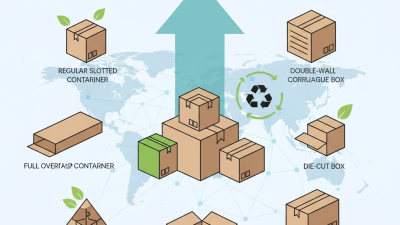
Stock Box Types in China: 3-Ply, 5-Ply, and 7-Ply Corrugated Grades
China Top Stock Boxes Manufacturers for Global Buyers
Stock boxes from China are commonly produced in 3-ply, 5-ply, and 7-ply corrugated grades. Each structure serves a different packing condition. A 3-ply box uses one fluting layer between two liners. It is lightweight and suitable for clothing, books, and small retail goods. However, it may crush under heavy stacking.
A 5-ply carton adds another fluting layer and liner. This improves compression strength and offers better protection during long-distance transport. It often suits machinery parts, appliances, and mixed-load shipments. A 7-ply box provides the strongest structure among these common options. It is useful for dense, heavy, or fragile cargo. Yet, extra strength also increases cost, weight, and storage space.
In practical sourcing, box performance depends on more than ply count. Paper quality, flute height, moisture, joint design, and pallet stacking all matter. A carton can look strong and still fail in humid conditions. That lesson is easy to miss.
Tips: Request samples before placing a large order. Test them with the expected product weight. Check edge crush and bursting strength reports. Confirm internal dimensions carefully. Small measurement errors can cause movement, wasted space, or damaged corners. If the shipment crosses several climates, ask for moisture-resistant paper options. Seven plies may feel safest, but it is not always the most efficient choice.
How to Compare China Manufacturers by ECT, Burst Strength, and GSM
When comparing China stock box manufacturers, do not judge strength from photographs or price alone. ECT measures edge crush resistance, which matters when boxes are stacked in warehouses or shipping containers. Burst strength measures resistance to punctures and sudden pressure. Ask for recent laboratory reports, test methods, and sample results from the same board grade. A reported ECT value without flute details can be misleading.
GSM shows the paper’s weight per square meter, but heavier paper does not always create a stronger box. Board structure, moisture, adhesive quality, and flute height also affect performance. For example, a 32 ECT box may suit lightweight retail goods, while dense products may require stronger stacking protection. I have seen buyers choose higher GSM and still receive crushed corners. The specification looked impressive, but the box design was weak. That mistake deserves review.
Tips:
Request three samples with identical dimensions. Test them after storage in realistic humidity. Record ECT, burst strength, GSM, compression results, and box weight. Check whether the factory tests every production batch or only the first sample. Also ask how they control recycled paper variation. A transparent manufacturer should explain failed tests without hiding them. Your final comparison should consider verified performance, production consistency, communication, and total shipping efficiency, not one attractive number.
MOQ, Production Capacity, and Typical 7–15-Day Export Lead Times
China Top Stock Boxes Manufacturers for Global Buyers
Global buyers often compare stock box suppliers by MOQ, production capacity, and export speed. In practical sourcing, ready-made boxes usually offer lower MOQs than fully customized packaging. Common starting quantities range from 500 to 3,000 pieces, depending on size, material, and printing requirements. Plain kraft and corrugated boxes are usually easier to source quickly. Custom colors may require extra production time.
Capacity should be checked with evidence, not attractive claims. Ask for monthly output, machine details, warehouse photos, and recent inspection records. A capable manufacturer should explain how it handles peak seasons, material shortages, and urgent replenishment. Small trial orders are useful. They reveal packing quality, size accuracy, and communication habits before larger payments are made.
Typical export lead times for stocked boxes are about 7–15 days after payment and artwork approval. This timeline may include final inspection, carton packing, and export documentation. Custom printing, unusual dimensions, or reinforced structures can extend production beyond two weeks. I have learned that a low MOQ can hide higher unit costs. Fast delivery can also mean limited quality checks. Confirm the actual dispatch date, not only the production date. Ask for carton dimensions and loading estimates before booking freight. Delays still happen. A written production schedule makes them easier to manage.
China Stock Box Supplier Benchmarks for Global Buyers
The chart compares typical non-branded stock-box categories by minimum order quantity, estimated monthly production capacity, and export lead time. Figures are indicative industry benchmarks for standard sizes and unprinted or lightly customized packaging; actual terms vary by material, order mix, destination, and inspection requirements.
Global Buyer Checklist: Pricing, Samples, QC, Incoterms, and Compliance
China Top Stock Boxes Manufacturers for Global Buyers
A buyer’s first quote is rarely the real cost. Ask for paper grade, box dimensions, printing method, finishing, tooling, minimum order quantity, and packing details. Smithers estimated the global folding carton market at about US$136.7 billion in 2023, showing strong demand but also intense supplier competition. Compare landed costs, not factory prices. Freight, inspection, duty, and storage can change the result.
Request three samples: a blank structure, a printed pre-production sample, and a mass-production sample. Check folding accuracy, corner strength, color consistency, odor, and surface scratches under normal light. Some suppliers send excellent samples, then change materials later. I have seen this gap create avoidable delays. Define the approved sample as a contract reference. For repeat orders, use ISO 2859-1 sampling or an agreed AQL plan, with defect photos and carton-opening records.
Use precise Incoterms 2020 wording, such as FOB with the named port or DAP with the named destination. Clarify who pays inland transport, export clearance, insurance, duties, and unloading. Compliance needs written evidence. Request material composition, recycled-content statements, ink information, and test reports where relevant. For European shipments, review current packaging and extended producer responsibility duties. Requirements vary by destination. Check them independently; supplier assurances alone are not enough. Pricing is often the easiest part to verify, yet buyers still under-document quality and compliance.